2K
HardenerZN-410
2K Acrylic Primer Hardener
2K hardener fully compatible with ZN-210, ZN-220 and ZN-250 acrylic primers; ensures a fast reaction, complete curing and easy sanding.
View product
Industrial Chemical SolutionsPaint systems for automotive refinishing and industrial surfaces
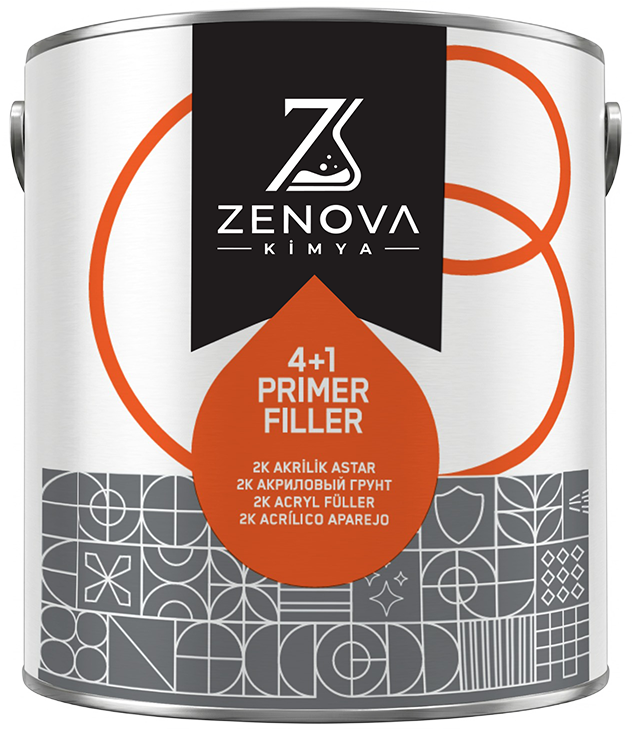
High-build 2K acrylic primer filler: covers filled areas, does not sag, sands easily and creates a smooth, isolating base for the topcoat.
Packaging
1 L · 3 L
ZN-210 4+1 Acrylic Primer Filler is a two-component acrylic primer filler developed for professional body shops. It covers filled and sanded areas, sanding marks and minor surface imperfections, creating an even base before the topcoat. The 4 : 1 mixing ratio by volume is easy to measure in the workshop and gives a repeatable application every time.
Its high build reliably covers filler edges and fine scratches in just a few coats. Thanks to its sag-resistant formula, it holds its shape on vertical panels, even when applied at high film thickness. Once dry, it sands easily without clogging the abrasive paper. The closed, isolating film it forms prevents the underlying filler and existing paintwork from affecting the topcoat, providing a smooth, uniform base for basecoat and clear coat.
ZN-210 is mixed 4 : 1 by volume with ZN-410 2K Acrylic Primer Hardener and thinned by 10–20% with ZN-510 Acrylic Thinner. It is applied over surfaces prepared with ZN-110 Universal Polyester Filler or ZN-130 Soft Finishing Filler. After sanding, the system is completed with basecoat and ZN-310 2K Acrylic Clear Coat, ZN-320 2K Acrylic MS Clear Coat or ZN-330 2K Acrylic HS Clear Coat.
Values are typical at 20 °C and 65% relative humidity. Please review the product's current Technical Data Sheet (TDS) before application.
| Product type | 2K acrylic primer filler |
|---|---|
| Mixing ratio (by volume) | 4 : 1 (primer : hardener) |
| Hardener | ZN-410 2K Acrylic Primer Hardener |
| Thinning | 10–20% ZN-510 Acrylic Thinner |
| Pot life (20 °C) | 45–60 min |
| Spray gun nozzle size / pressure (HVLP) | 1.7–1.9 mm / 2.0 bar |
| Number of coats / dry film thickness | 2–3 coats / 100–150 µm |
| Drying (20 °C / 60 °C) | 3–4 h at 20 °C; 30–40 min at 60 °C |
| Sanding | Dry P400–P500; wet P800–P1000 |
| Colour | Grey |
Grey
Our technical team will send the Technical Data Sheet (TDS) and Safety Data Sheet (SDS) you request by email.
Drying times vary with temperature, humidity, film thickness and air circulation. Consult our technical team about special conditions.
The recommended application sequence for a professional result.
Sand filled areas with P180–P240 and the surrounding paintwork to be primed with P240–P320. Blow off the dust with compressed air and clean the surface with ZN-530 Surface Cleaning Thinner. We recommend first applying ZN-230 1K Fast Repair Primer to any bare metal spots exposed during sanding.
Mix the primer 4 : 1 by volume with ZN-410 2K Acrylic Primer Hardener, then add 10–20% ZN-510 Acrylic Thinner. Use a mixing ruler and stir until the mixture is completely uniform.
Apply 2–3 coats with an HVLP gun fitted with a 1.7–1.9 mm nozzle at approximately 2.0 bar inlet pressure. Allow 5–10 min between coats, until the surface turns matt.
Dry for 3–4 h at 20 °C or for 30–40 min at a part temperature of 60 °C. Drying takes longer with thick coats and at low temperatures.
Apply a dry guide coat, then sand dry with P400–P500 or wet with P800–P1000. For metallic and pearlescent colours, use the finer end of the range.
Clean the surface with ZN-530 Surface Cleaning Thinner and wipe it with a tack cloth, then continue with the basecoat and clear coat system.
Zenova products tested in the same system as this product, which give the best results together with it.
2K hardener fully compatible with ZN-210, ZN-220 and ZN-250 acrylic primers; ensures a fast reaction, complete curing and easy sanding.
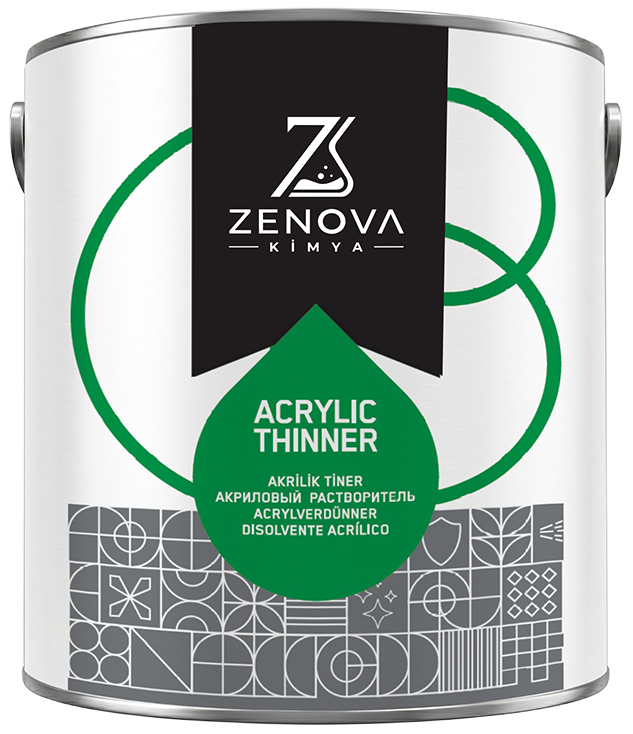
Balanced-evaporation thinner that brings 2K acrylic paints, clear coats and primers to ideal spray viscosity; reduces orange peel and ensures even flow.
Multi-purpose 2K polyester filler for dents and surface defects on steel, aluminium, galvanised steel and fibreglass; non-sagging, fast-drying and easy to sand.
Ultra-flexible, creamy 2K finishing filler for large surfaces and thin fills. Sands very easily without clogging the paper, leaving a flawless base for primer.
Choosing the right abrasive from filler to clear coat: P grit grades, a typical sanding sequence, the 100-grit rule, dry vs wet sanding and orbital sanders.
Read articlePainting in cold, humid weather: understand dew point and 2K curing, heat the booth and choose the right thinner and hardener to prevent drying problems.
Read articleWhat do 4:1 and 5:1 mixing ratios mean for 2K primers? Measuring by volume, pot life, thinner addition and the effects of the wrong ratio explained.
Read articleAdd the product to your quote list or contact our sales team directly, and we will prepare a quote for the pack size and quantity you need.